I’ve been testing BypassGPT and I’m unsure if I’m using it safely or getting reliable results. Some responses feel off, and I’m worried about accuracy, privacy, and potential policy issues. Can anyone share real experiences, pros and cons, and tips on how to use BypassGPT correctly or suggest better alternatives?
BypassGPT review from someone who tried to test it properly
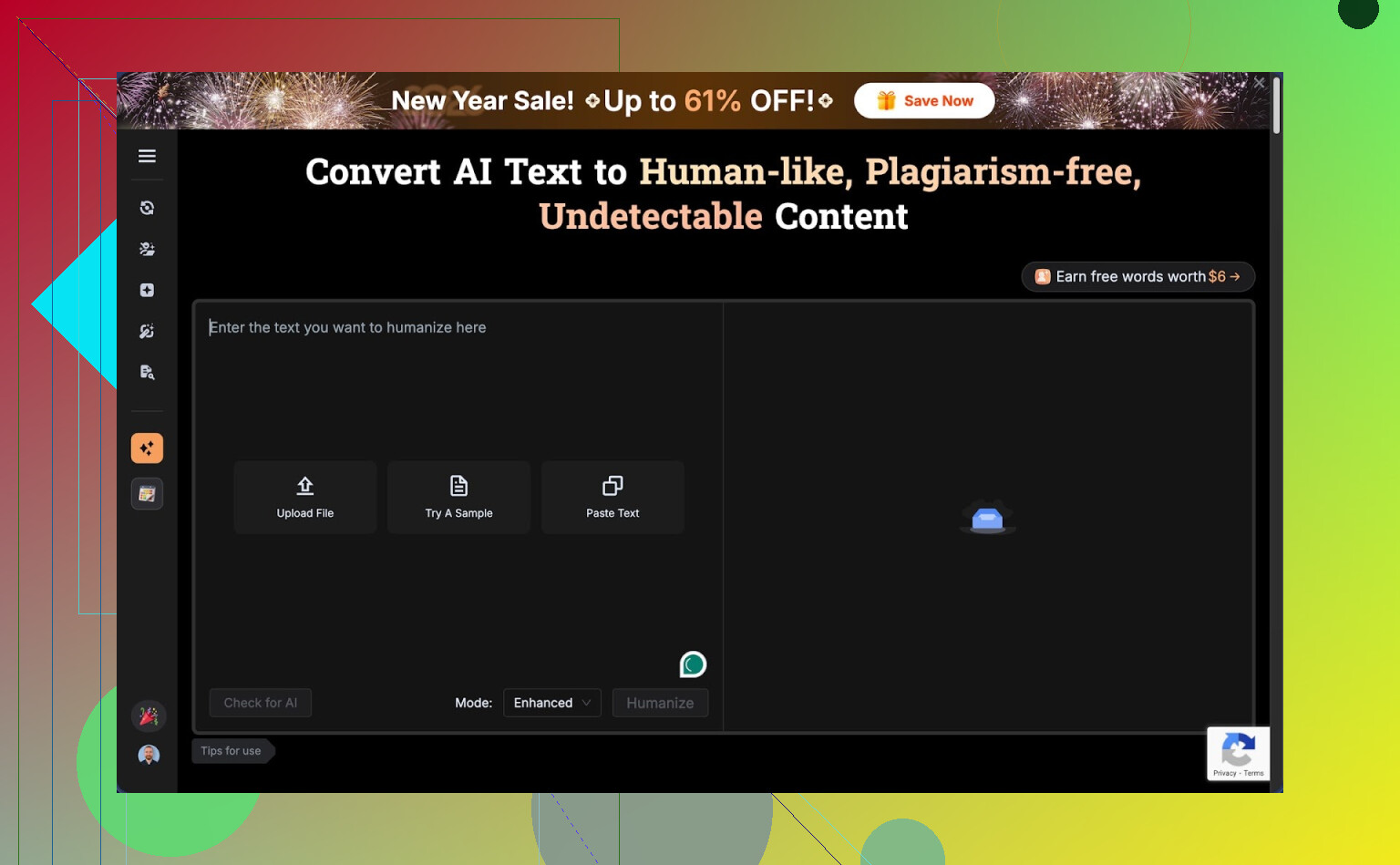
I tried to give BypassGPT a fair shot. It fought me the whole way.
First problem was the free tier. The public page says there is a free option, which is true, but you hit a wall fast. The limit on the free plan was 125 words per input and 150 words per month total. That monthly cap is not a typo. I burned through most of it with one normal-sized test sample I use for comparing tools.
To squeeze a bit more out of it, I made a free account. That unlocked an extra 80 words. So I got one partial run of my standard test, not even the full thing. After that, locked out.
I tried the obvious trick of making a new account. No luck. The limit followed my IP. If you want to bypass that, you would need a VPN or a different connection. For anyone trying to evaluate it seriously, the free plan feels more like a teaser than a trial.
Detection tests: mixed results and weird claims
With the few words I had, I ran one of my usual checks.
Here is what happened:
• I took an AI-written sample I use across tools.
• Ran it through BypassGPT once.
• Sent the output to multiple detectors.
Results:
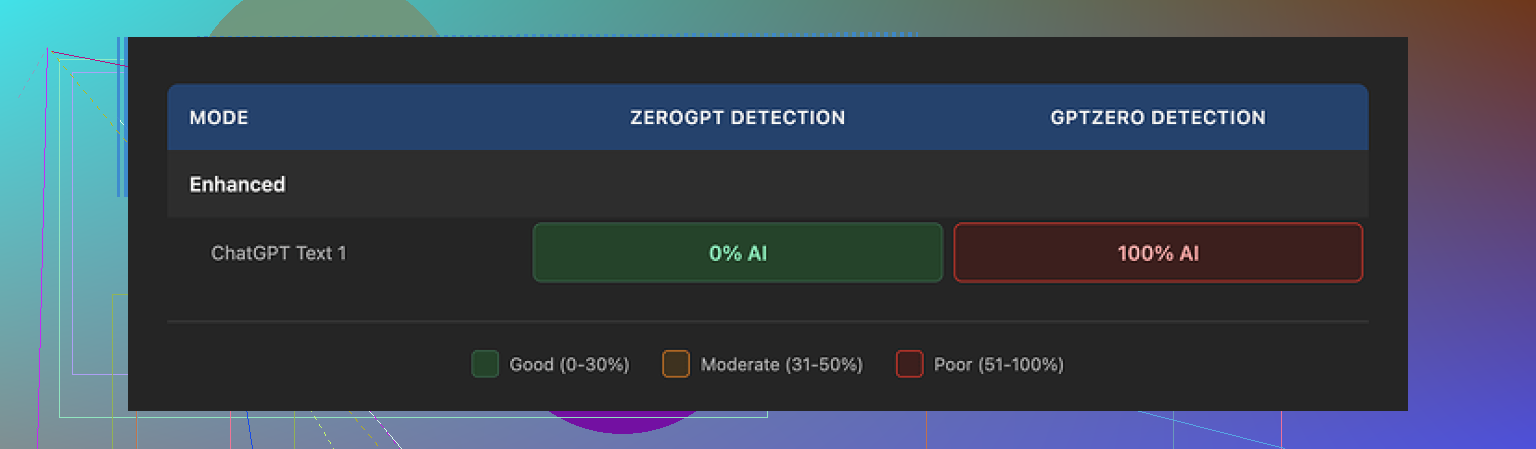
• ZeroGPT: 0% AI detected. Full pass.
• GPTZero: 100% AI detected on the exact same text.
• BypassGPT’s own checker: it showed a perfect pass across six detectors.
That last part is the red flag for me. Their internal checker said the text passed all six detectors, while I was staring at GPTZero showing a full 100% AI flag. So the “all green” dashboard inside BypassGPT did not match external reality.
With a bigger word budget I would have run more variations, but even from this short run, the pattern looked off. The tool is not useless, because ZeroGPT did give it a clean pass, but the internal “six detector” score felt more like marketing than a faithful mirror of what outside tools report.
Text quality: not great for something sold as “humanizer”
Ignoring detectors for a moment, I checked the actual writing.
On that single run, I saw:
• First sentence was grammatically broken. It read like a half-edited draft.
• Em dashes were still there, unchanged, so it had that typical AI rhythm.
• Some phrasing felt stiff, the sort of wording you see from unedited LLM output.
• There was a typo in the generated text.
If I had to slap a number on it, around 6/10 text quality. With light editing, it might pass for quick content, but for anything serious I would not trust it without heavy rewrites.
Pricing and terms: cheap entry, expensive rights grab
The pricing when I checked:
• Around $6.40 per month on an annual plan for about 5,000 words.
• Around $15.20 per month for an “unlimited” plan.
Prices themselves are not wild compared to other tools, especially for the unlimited tier.
The part that stopped me was the terms of service. Buried in the legal text, BypassGPT gives itself broad rights over anything you send through it. That includes permission to:
• Reproduce your content
• Distribute it
• Create derivative works from it
So if you feed it original writing, client work, or anything sensitive, you are handing them rights far beyond what I am comfortable with for a text tool.
If you use it for homework or random blog spam, you might shrug at that. For commercial or professional work, this is a no-go for me.
What worked better for me
For comparison, I ran the same base text through Clever AI Humanizer on a different day.
Link to their review and tests is here:
https://cleverhumanizer.ai/community/t/bypassgpt-review-with-ai-detection-proof/39
My experience matched what is written there:
• Output felt more natural and less “LLM-ish”.
• Detection scores were higher across multiple external tools.
• No tight word caps in the way, and it was free to use.
So if your goal is to push AI text closer to human style and you do not want to sign away broad rights to your content, Clever AI Humanizer did a better job in my tests and did not get in my way during evaluation.
Quick takeaway if you are deciding
If you are thinking about paying for BypassGPT, here is how I would look at it based on what I saw:
Use BypassGPT if:
• You are okay with short tests and want to see if ZeroGPT likes the output.
• You do not care much about the terms around content rights.
• You are fine editing the output yourself.
Skip it and look elsewhere if:
• You want honest detection reporting from the tool itself.
• You need more than 150 free words to evaluate before paying.
• You care about who holds rights over your text.
• You want cleaner writing out of the box.
For my own work, I dropped BypassGPT after the trial attempts and stuck with Clever AI Humanizer and manual editing.
6 Likes
You are right to be cautious here. I tested BypassGPT a bit differently from @mikeappsreviewer, so I will add another angle.
- Reliability of outputs
My main issue was consistency. Same prompt, same settings, very different “humanized” results. Some looked close to stock LLM text with light paraphrasing. Others changed facts or added stuff I never wrote. So if you care about accuracy, you need to line by line compare source vs output. Do not trust it for anything technical, legal, medical, or anything where facts matter. Treat it as a rewriting toy, not an expert.
Practical tip:
Paste your original text and the BypassGPT version side by side. Scan for:
• New claims that were not in your draft
• Numbers, dates, citations that changed
• Tone shifts that break your intent
- AI detector “bypass” reality
Detectors disagree with each other all the time. In my tests, BypassGPT outputs passed some detectors and failed others, similar to what was reported. I saw cases where its own “multi detector” panel showed all green while external tools still screamed AI.
I would not rely on any one “dashboard” that sits inside a tool that sells bypassing as a feature. That is a conflict of interest. If you must check, use several independent detectors yourself and expect mixed scores, no matter what tool you use.
- Privacy and terms
The ToS is the bigger problem for you if you care about client work, research, or anything sensitive. Broad rights to reproduce and create derivative works from your input means: treat anything you paste as public, not private. Do not send:
• Client documents
• Unpublished manuscripts
• Internal reports
• Student essays with personal info
If you want safer handling, use tools that state they do not store or reuse your content, or run a local model. Double check privacy pages, not the marketing site.
- Policy and school / workplace risk
If your concern is “will this get me in trouble,” BypassGPT does not magically make AI content safe. Even if it passes some detectors, you still:
• May violate school policies on AI assist
• May break client or employer rules about AI usage
• May introduce hidden plagiarism if the model pulls in stock phrases
If you need to stay compliant, the only safe route is to treat it as an assistant then heavily rewrite, add your own examples, and be transparent where required.
-
How to use it more safely, if you keep testing
If you want to keep experimenting:
• Use it only on noncritical text, like drafts for low risk content
• Strip any personal or client identifiers before pasting
• Keep your own offline copy of everything important
• Assume all outputs need editing and fact checking
• Do not rely on it for “passing” any formal AI checks -
Alternatives that behaved better for me
Clever Ai Humanizer gave me more natural sounding rewrites and did not choke me on tiny word caps. The text felt closer to how humans write emails or blog posts. Detection scores were also less chaotic across multiple third party tools. I still review everything, but for “make this less robotic” work, it fit better. -
If you feel responses are “off”
Trust that instinct. If something reads weird, or feels too generic or stiff, your teacher, editor, or client will notice as well. Use any humanizer as a starting point, then:
• Reinsert your own voice
• Add personal details, examples, and specific context
• Shorten or simplify sentences that sound overproduced
Short answer for your worries:
• Accuracy: weak, needs manual checking
• Privacy: risky for sensitive content given the terms
• Policy issues: tool will not protect you from rules, you are still responsible
If you already feel uneasy, limit BypassGPT to throwaway tests and low value content, and lean more on tools like Clever Ai Humanizer plus manual editing where you stay in control.
You’re not crazy to feel like some of BypassGPT’s answers are “off.” I’ve had a similar vibe with it, and what @mikeappsreviewer and @suenodelbosque wrote matches a lot of what I’ve seen, with a few small differences.
My experience, boiled down:
- Accuracy and reliability
For anything factual, BypassGPT is risky. It does not just “humanize” wording, it sometimes quietly rewrites meaning. I’ve seen:
- Numbers slightly altered
- Nuanced statements turned into confident but wrong claims
- References subtly dropped or changed
If you care about being right, you have to compare original vs output line by line. Personally, if something needs to be accurate (school work with citations, reports, technical content), I do not pass it through BypassGPT at all. I’d rather use a regular LLM and explicitly tell it “do not change facts, only tone,” then manually check.
- AI detector bypass reality
I partially disagree with the idea that “it’s not useless” just because it passes some detectors. Detectors are already unreliable and noisy. Building a workflow around “does this beat ZeroGPT or GPTZero” is a trap.
All BypassGPT really does is play the statistical style game. Teachers or managers reading carefully will often still smell AI, especially when tone is generic and structure is too neat.
So:
- Detectors: flaky and inconsistent across tools
- BypassGPT’s internal “multi detector” thing: treat it as marketing, not data
- If your main goal is “fool AI detectors,” you are playing a game that can change overnight with one model update
- Privacy and ToS
Totally agree with both reviewers here, and this is actually my biggest red flag. Those broad rights in the terms are not theoretical. If a service says it can reproduce or make derivative works from what you send, mentally assume: “I’m donating this text.”
Concrete rule I use:
- Client work: absolutely not
- Anything containing names, IDs, private company info: no
- Personal creative work you might publish later: also no
If you must use a humanizer, keep it for low stakes stuff like rough blog drafts, social posts, or generic emails with all identifiers stripped out.
- Policy risk (school / work)
BypassGPT does not make AI usage “safe.” If your school or employer bans or restricts AI tools:
- It is still AI generated text, no matter how “human” it looks
- If you are caught, “but it passed a detector” is not a defense
- Detectors might miss you today and flag a similar pattern tomorrow
If you are under strict policy, the only semi-sane route is:
- Use AI for idea generation or outlining
- Write your own final text
- Be transparent when required
- How to use it with less risk, if you really want to
If you keep experimenting with BypassGPT:
- Treat every output as a rough draft to cannibalize, not something you copy-paste
- Never paste full, sensitive documents
- Rewrite in your own voice after using it, add specifics and personal examples
- Do your own fact check, especially dates, numbers, quotes
-
On the free tier and limits
One thing I actually think is “fair” is tying usage to IP to stop people spinning endless free accounts. Annoying, yes, but normal for this kind of tool. Where it crosses into pointless is the tiny free limit. It is just not enough to truly evaluate the product unless your needs are very small. -
Alternatives like Clever Ai Humanizer
If your core goal is “make text sound less robotic without wrecking meaning,” I’ve had better luck with Clever Ai Humanizer. Two specific things it did better for me than BypassGPT:
- It kept the factual structure closer to the original when I explicitly asked it not to invent details
- The text rhythm felt more like a real email or blog draft, less of that polished LLM cadence
Still not magic, still needs editing, but as a style tool it felt more honest. If you look it up, you’ll see a bunch of people using “Clever Ai Humanizer” exactly for that “AI to human style” niche and then layering manual edits on top. That workflow is safer than blindly trusting BypassGPT’s “detector proof” branding.
- So what should you do?
Given your concerns:
- Accuracy: do not trust BypassGPT on anything important
- Privacy: assume anything you paste is not private, and act accordingly
- Policy: if you can get in trouble for using AI, this tool will not save you
If your gut is already telling you something is off, I’d restrict BypassGPT to disposable tests and low value content, and shift to a combo of:
- A more transparent rewriting tool like Clever Ai Humanizer
- Your own edits and voice on top
Once you stop thinking in terms of “bypass” and start thinking “draft help that I fully own and fix,” the whole thing becomes a lot less stressful.
BypassGPT is basically a “style randomizer” with marketing wrapped around it. Given what @suenodelbosque, @viaggiatoresolare and @mikeappsreviewer already tested, I’d look at your doubts as a signal to throttle back hard.
A few angles they didn’t lean on as much:
1. Safety vs “plausibility”
The scary part with BypassGPT is not that it is obviously wrong, it is that it is plausibly wrong. A detector flag you can argue with. A confidently wrong number or reworded claim inside a client report or assignment is much harder to catch later.
For anything that must stay faithful to the source, a tool that aggressively “humanizes” can be worse than a normal LLM, because you stop recognizing which parts are yours.
2. Detectors are the wrong goal
You said you are worried about policy issues. That is the key point. Institutions almost never write rules like:
“You may use AI as long as it passes ZeroGPT.”
They write:
“Do not submit AI generated work as your own.”
Even if BypassGPT got you a green light on every detector on earth, you are still submitting AI shaped text. This is where I disagree slightly with the idea that these tools are “useful if they pass some detectors.” In policy terms, that passing grade is cosmetic.
If you are in a context where AI use must be declared, you are safer using a standard model, being transparent, and editing heavily in your own voice than trying to “launder” it.
3. Privacy: think in threat models
Instead of “is this private,” ask:
- Would I care if this text were logged indefinitely?
- Would I care if segments of it later surfaced in training data?
- Would I care if a third party could reconstruct sensitive context from it?
If the answer is yes to any of those, BypassGPT’s broad content rights are a deal breaker. Given that, I would cap it to:
- Disposable marketing fluff
- Generic blog intros
- Social captions without real names or details
Anything more serious, no.
4. How to actually get value out of a humanizer
If you still want the “less robotic” feel:
- Generate with a normal model that you trust a bit more for accuracy.
- Run only the most robotic parts through a humanizer.
- Paste the snippets back and then rewrite them in your own style.
So the humanizer becomes a thesaurus with taste, not an invisible middleman that owns your whole draft.
5. Where Clever Ai Humanizer fits
You mentioned results feeling off. That is exactly the niche where something like Clever Ai Humanizer can be useful, but only if you use it as a style helper, not a detector shield.
Pros of Clever Ai Humanizer in that role:
- Tends to keep structure closer to your original when asked, so fewer “stealth” meaning changes.
- Outputs read more like normal email or blog prose instead of the hyper-polished AI cadence.
- No tiny word cap walls while testing, so you can actually see how it behaves on real chunks.
Cons to keep in mind:
- It is still an AI model, so it can hallucinate, especially if you let it rewrite entire sections.
- You still need to handle your own policy compliance; no tool can “certify” your work as human.
- If you paste in sensitive or proprietary material, you face the same broad risks as with any hosted service.
Used right, Clever Ai Humanizer is decent when your main goal is readability and flow. Used as a “detector bypass button,” it is the same trap as BypassGPT.
6. How I would handle your situation
Given your concerns:
- For anything graded, regulated or client facing, skip BypassGPT entirely and avoid chasing detector scores.
- If you really want smoother wording, draft normally, then use a tool like Clever Ai Humanizer on short, noncritical sections, followed by your own pass to reinsert your voice.
- Keep anything sensitive completely out of these services or move to local / self hosted options if you need AI on private material.
If your gut is already telling you something is off with BypassGPT, treat that as confirmation and downgrade it to “toy for low stakes experiments,” nothing more.