I accidentally permanently deleted important files from my Mac’s SSD, and they’re not in the Trash or a backup. I’m trying to find the best way to recover deleted files on Mac from an SSD before anything gets overwritten. Has anyone had success with Mac SSD data recovery tools or steps that actually work?
I’ve messed this up before, more than once. You empty Trash, then your stomach drops because the one file you needed was in there. First thing, stop using the Mac. Don’t keep browsing, don’t install stuff, don’t leave it chewing through background work if you can help it. New writes to the drive eat the space where your deleted file was sitting. If those blocks get reused, recovery gets ugly fast, or flat out fails.
This is the order I’d go in, from quick checks to the stuff I only tried when the easy options were dead.
1. Start with the obvious stuff
If the delete happened a minute ago, press Command+Z. I know, basic. Still worth doing. macOS sometimes reverses the move to Trash if you haven’t done much since.
Then look in Trash again. One more time. I’ve sworn it was empty, then found the file sitting there because I missed it in the list.
If the file lived on an SD card, USB drive, or external disk, keep in mind those devices keep their own hidden trash folders. Plug the device back in and check again. If the file shows up, right-click it and use Put Back.
2. Check backups before you touch recovery apps
If you use Time Machine, this is the cleanest fix. Open the folder where the file used to live. Hit the Time Machine icon in the menu bar, choose the backup browser, then roll back to a point before the deletion. Restore the file and move on with your day.
No Time Machine. Fine. Check iCloud.com. If Desktop and Documents syncing was on, there’s a Recently Deleted area which keeps files for 30 days. I’ve had files show up there when I was sure they were gone.
3. Use recovery software if backups came up empty
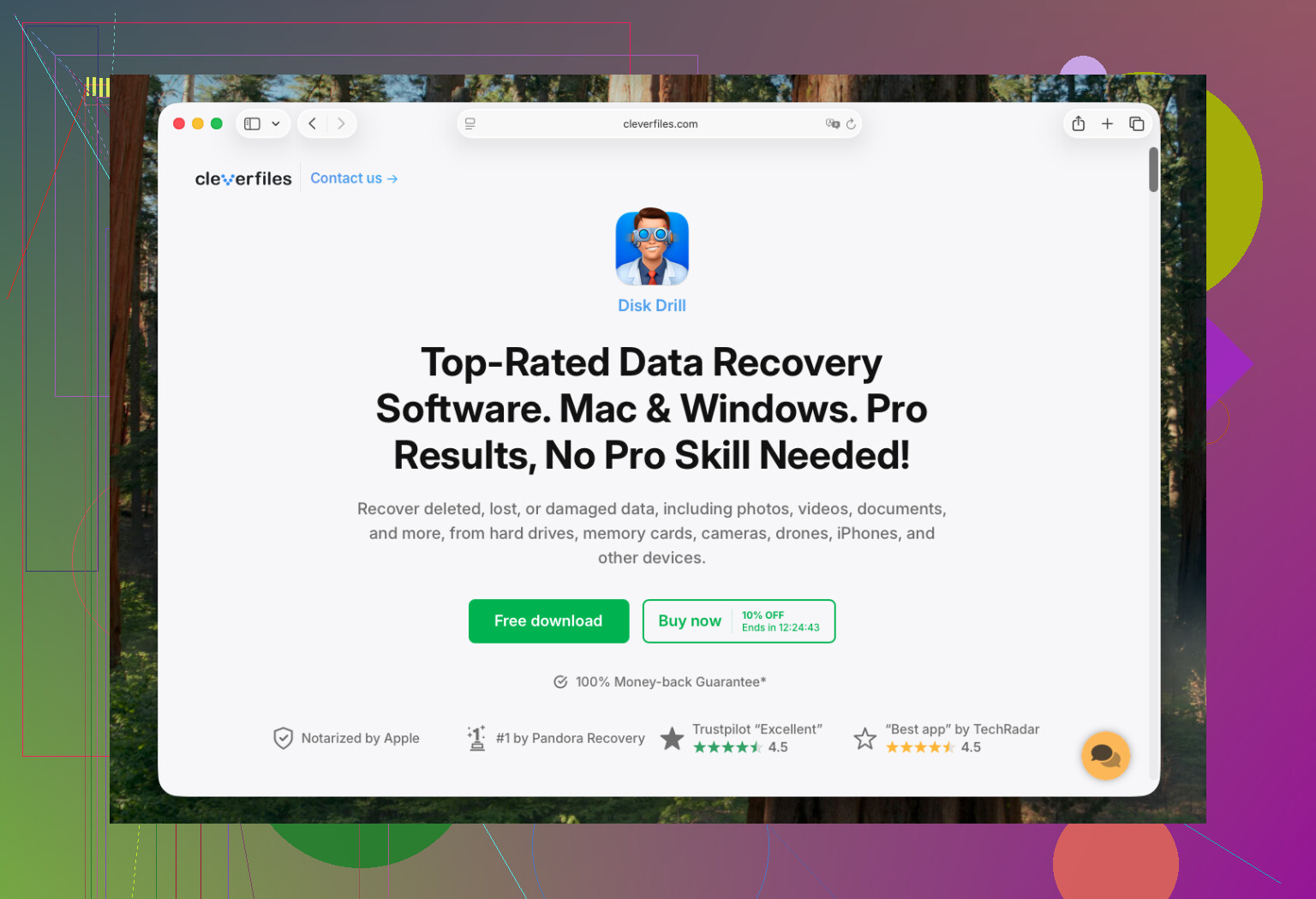
If there’s no backup, this is where most people end up. The one I’ve seen work best on newer Macs is Disk Drill. On current macOS builds, including newer Apple Silicon machines, it tends to behave better than older recovery tools I tried.
New Macs are a pain here for a reason. T2-equipped systems and Apple Silicon boxes keep storage locked down and encrypted in ways older recovery apps never handled well. Some old tools scan, stall, or return junk. This one is easier to deal with. Pick the drive, run the scan, then check the preview before you spend money or time chasing the wrong thing.
If you like open-source tools and don’t mind rough edges, PhotoRec is another route. It’s free. I wouldn’t hand it to someone who hates terminal-style workflows. It also skips original filenames, so you wind up sorting a pile of files with names like f12345.jpg. If you lost ten photos, fine. If you lost a project folder with hundreds of mixed files, it turns into a slog.
4. Look for APFS snapshots
This one gets missed a lot. Even without a full Time Machine setup, macOS sometimes keeps local APFS snapshots around, often after updates or system events.
Open Disk Utility, select your Data volume, then check for Show APFS Snapshots. If there’s a snapshot from before the deletion, you might be able to mount it and pull the file out.
I wouldn’t count on this every time, though when it’s there, it feels like a lucky break.
5. Move fast on SSDs
This part matters. Most modern Macs use SSDs, and SSDs use TRIM. Once files are deleted, the drive gets told those blocks are free, and cleanup happens much sooner than it used to on spinning hard drives.
On an old HDD, I used to get away with waiting. On a newer MacBook SSD, I wouldn’t bet on having much time. If the file matters, stop writing to the disk and check recovery options right away.
What I’d do in your spot
Check Time Machine first. Then iCloud.com. If both are empty, try a recovery scan with Disk Drill. If you’ve got an external drive, run or save recovered files there instead of back onto the Mac’s internal drive. Writing recovered data onto the same disk is how people make a bad situation worse. I did this once. Learned fast.
Hope you get it back.
8 Likes
If the files were deleted from an internal Mac SSD, time matters more than tools. I agree with @mikeappsreviewer on stopping disk activity. I disagree a bit on APFS snapshots as a main move. Nice when they exist, but on most Macs I check, they do not save user files in a way people expect.
What I’d do next is boot the Mac into macOS Recovery, or shut it down and work from another Mac if you have one. The goal is to avoid writes on the same SSD. If FileVault was on, recovery gets harder after deletion because SSD TRIM clears blocks fast. On many modern Macs, recovery odds drop hard after hours or a day of use.
Best path with no backup:
- Connect an external drive.
- Run Disk Drill from external storage, not your internal SSD.
- Scan the internal SSD in read-only mode.
- Preview results first.
- Recover files to the external drive only.
Disk Drill is one of the few Mac data recovery tools I’d still try first on APFS and SSDs. If it finds clean previews, your odds are decent. If previews are broken or empty, the data is often gone.
If the file type is important, focus the scan. Photos, PSD, DOCX, ZIP, and video all behave differently after deletion. RAW photo and video files often recover with damage. Office docs either open or they don’t. Kinda brutal, but true.
Also worth checking app-specific recovery:
Pages, Word, Excel, Photoshop, and some IDEs keep temp or autosave copies in Library folders or inside the app’s own recovery cache. Spotlight won’t always show them. Search these folders:
~/Library/Containers
~/Library/Application Support
~/Library/Autosave Information
/tmp
For a visual walkthrough, this Mac SSD deleted file recovery tutorial covers the process pretty well.
If Disk Drill finds nothing useful, I’d stop there unless the files are worth pro lab pricing. DIY attempts after that usualy waste time and lower your shot.

One thing I’d add to what @mikeappsreviewer and @reveurdenuit said: check whether the file was ever opened by another app recently, not just whether the original file itself can be recovered.
A lot of people jump straight to raw SSD recovery, but sometimes the easier win is a duplicate, temp export, or versioned copy sitting somewhere weird. For example:
- Preview may keep recent copies of PDFs and images
- QuickTime projects can leave temp media behind
- Logic, Final Cut, Adobe apps, Office, and even some browser-based editors stash autosaves/caches
- Mail attachments may still exist in local containers even after the “real” file got deleted
So before doing a deep scan, I’d search these manually:
~/Library/Group Containers~/Library/Caches~/Library/Saved Application State~/Library/Containers/private/var/folders
Use Finder search with file extension plus “System files included”, or Terminal with mdfind if Finder misses stuff. It’s annoying, yeah, but I’ve recovered files that way when actual deleted-file recovery failed completley.
Also, slight disagreement with the “scan ASAP no matter what” angle. On an internal Apple SSD, if TRIM already did its thing, repeated rescans with different tools usually don’t magically improve anything. One proper pass is better than five panic passes. If I were doing this, I’d either:
- look for app-generated copies first
- then use Disk Drill once, carefully
- recover only to an external drive
- stop if previews are blank/corrupt
That matters because on SSDs, “found” does not always mean “recoverable.” File entries can survive while the actual blocks are already zeroed or recycled. Kinda cruel, but that’s modern storage.
If the deleted files were photos or documents, Disk Drill is still a sensible choice on Mac because it handles APFS better than a lot of old recovery apps. Just don’t install it onto the same internal SSD if you can avoid it.
Also dropping this since it’s relevant: Mac data recovery software tips and recovery methods
If none of that turns up anything usable, you’re basically down to pro recovery lab territory, and for a TRIMmed Mac SSD, that can get expensive real fast.
One extra angle nobody’s really stressed enough: check cloud/app version history, not just backups.
If the file lived in iCloud Drive, Dropbox, OneDrive, Google Drive, Notion, Figma, Office 365, Adobe cloud docs, or even a synced project folder, the “deleted file” may still exist as a prior version or web-side deleted item. That’s different from Trash and different from Time Machine. I’ve seen people miss this because they only searched locally.
I also slightly disagree with making APFS snapshot hunting a priority unless you already know snapshots exist. Useful, sure, but on a lot of Macs it’s a dead end.
My order would be:
- Stop using the Mac.
- Check cloud/version history from another device.
- Search app-specific autosave/version stores.
- If nothing, run Disk Drill from external storage and recover to an external drive.
Disk Drill pros:
- good APFS support
- easy preview
- simpler than PhotoRec
- decent filtering by file type
Disk Drill cons:
- paid for full recovery
- “found” files on SSD do not always mean usable files
- deep scans can return lots of junk names
PhotoRec/TestDisk are fine if you like free tools, but sorting output is a pain. So yeah, I’m mostly with @reveurdenuit, @caminantenocturno, and @mikeappsreviewer on acting fast, just with more emphasis on cloud/version recovery before raw SSD carving.