I’ve been testing Monica AI’s text humanizer for content and social posts, but I’m not sure if it’s really improving quality or just rephrasing things. Sometimes it feels a bit generic and I’m worried about detection and SEO. Can anyone share real experiences, pros and cons, and tips on getting the best results from Monica AI Humanizer?
Monica AI Humanizer Review
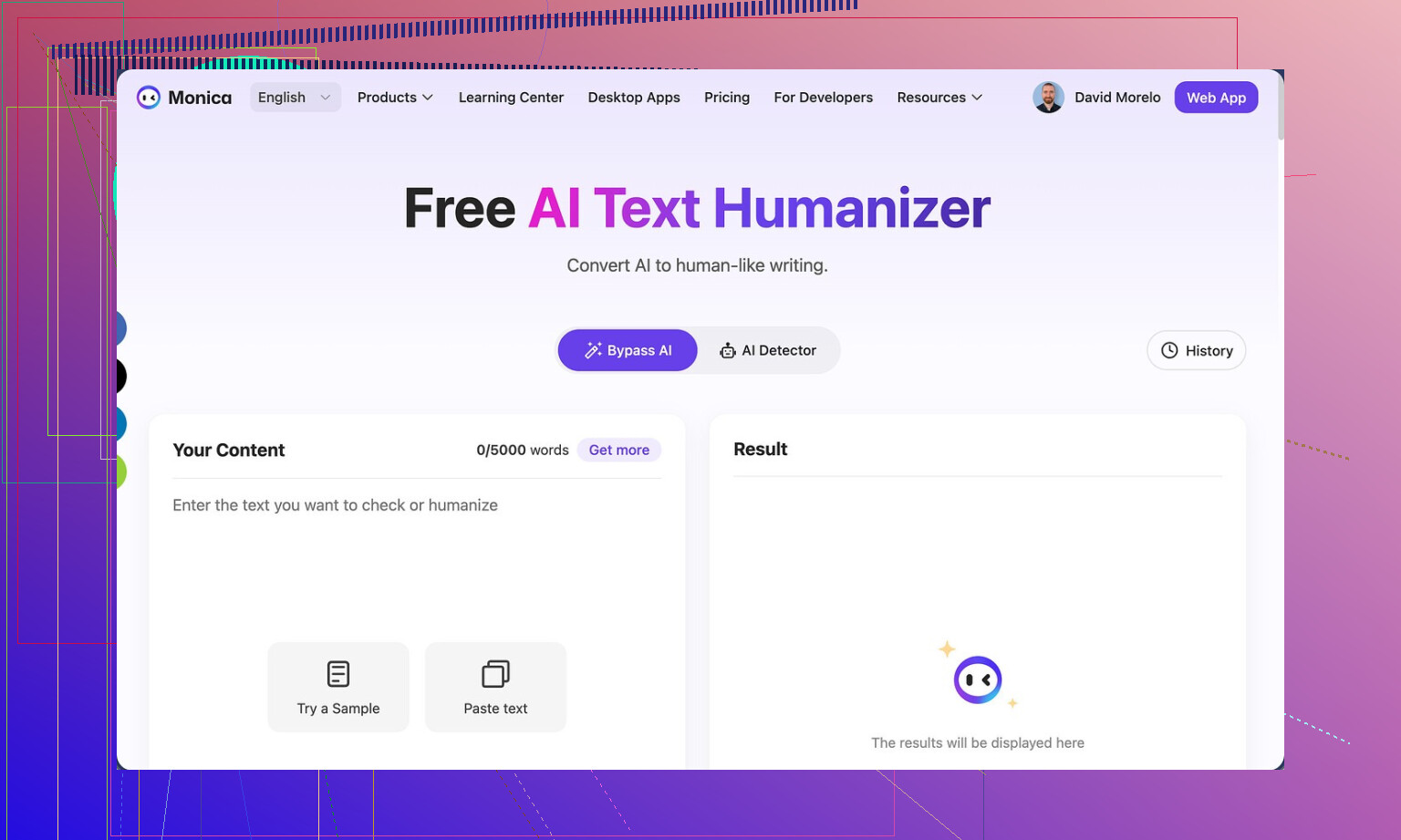
So I spent some time playing with Monica’s “AI Humanizer” and ran it through a few detectors. Here is what happened, no sugarcoating.
Original review link for context:
https://cleverhumanizer.ai/community/t/monica-ai-humanizer-review-with-ai-detection-proof/33
What the tool gives you
The humanizer is basically a single button.
No sliders.
No tone choices.
No “light vs heavy” rewrite settings.
No output modes.
You paste text, press humanize, hope for the best. That is the whole “UI”. For quick tests it felt convenient, then I hit the detectors and the issues showed up fast.
Detection results I got
I ran the humanized text through a couple of common detectors to see how well it passed.
Tools used:
- GPTZero
- ZeroGPT
Results on several test passages:
GPTZero:
- Every humanized version flagged as 100% AI.
- No borderline scores, just full red across the board.
ZeroGPT:
- Two samples came back at 0% AI.
- One sample landed around 23% AI.
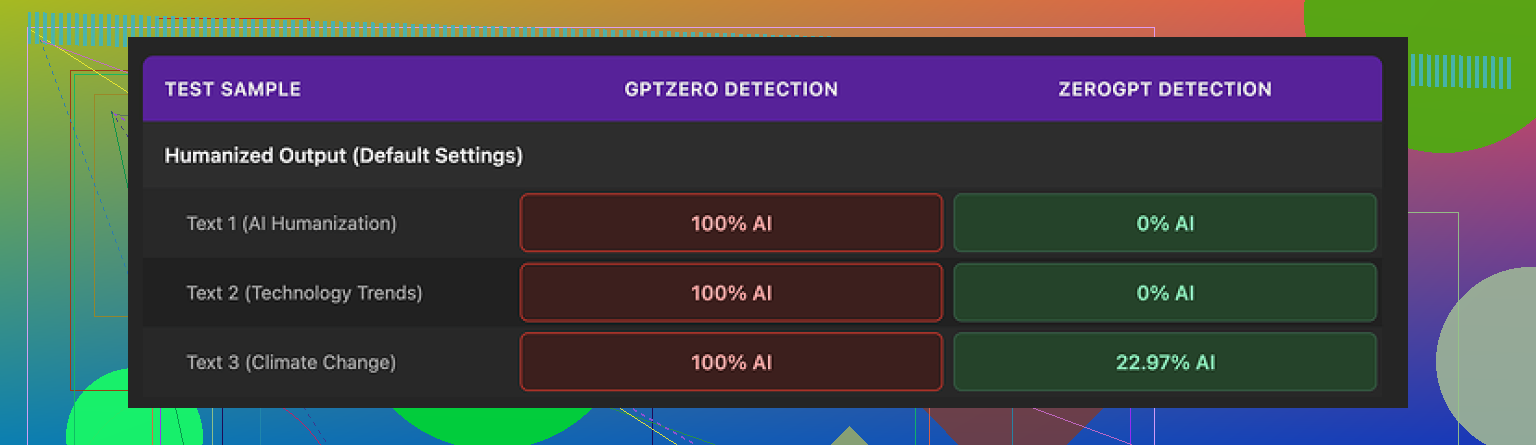
So you end up in this awkward situation. If your text gets checked with ZeroGPT, you might skate by. If someone uses GPTZero, your “humanized” text still looks like straight AI output. Since you usually do not know which detector a teacher or client will use, this makes the tool unreliable for any serious detection avoidance.
Quality of the writing
Score I’d give it: 4 out of 10.
Here is what I saw across multiple runs:
-
It added random typos to clean text
Example from one of my tests:- Original: “But the main limitation is…”
- Humanized: “Ubt the main limitation is…”
That “Ubt” was not in the source. Monica introduced it.
-
It messed with punctuation in odd ways
- Some contractions lost apostrophes.
- Others gained apostrophes where they did not belong.
-
It inserted weird labels
- One output started with “[ABSTRACT” stuck at the front of the paragraph for no reason.
- Nothing in my prompt mentioned abstracts.
-
It kept and added em dashes
- AI detectors often key in on certain punctuation habits.
- The original AI text had em dashes, and Monica left them in.
- In a few cases it seemed to add more.
For a “humanizer,” that is moving in the wrong direction. You want text that feels like a human rewrite, not AI-styled punctuation cloned and amplified.
The end result reads like an AI paraphrase with a few forced errors sprinkled on top, not like a genuine human rewrite with varied structure and natural phrasing.
Pricing and where the humanizer fits
Monica is not sold as a dedicated humanizer. It is a big all-in-one AI platform:
- Chatbot / writing assistant
- Image generation
- Video tools
- Misc productivity stuff
The humanizer sits in there as a side tool.
Pricing when I checked:
- Pro plan starting at about $8.30 per month if you pay annually.
So you are not paying “for the humanizer” specifically. You are paying for the main platform, and the humanizer comes along for the ride.
Who this is for
From my tests, I see two very different use cases:
-
You already use Monica for other features
- If you are on Monica for chat, images, or video, the humanizer is basically a built‑in extra.
- In that case, sure, you can experiment with it without changing your budget.
- I would treat it as a light rephrasing tool, not a safety net against detectors.
-
You want something focused on bypassing AI detection
- For that goal, this tool misses the mark.
- GPTZero still flags outputs as fully AI.
- The random typos do not help, they make the text look sloppy instead of human.
In my own comparison runs, I tested the same base text through Monica’s humanizer and through Clever AI Humanizer, then checked both with detectors.
On those samples:
- Clever AI Humanizer produced outputs that scored better as “human” and read more naturally.
- It also did not require payment when I tried it.
Link again for those tests:
https://cleverhumanizer.ai/community/t/monica-ai-humanizer-review-with-ai-detection-proof/33
Bottom line from my experience
- Control: Monica gives you almost none.
- Detection: ZeroGPT sometimes passes it, GPTZero fails it hard.
- Quality: Around 4/10, with added typos and odd artifacts.
- Pricing: Starts near $8.30/month on annual billing, bundled into a broader AI suite.
If you are already paying for Monica for other reasons, the humanizer is something you can poke at for free on the side.
If your main concern is AI detection and you need reliable humanization, I would not pick this as your primary tool.
9 Likes
I had the same reaction to Monica’s humanizer as you. It feels more like a rephraser than a real “make this sound human” tool.
From my tests:
- Quality for social and content
- It keeps sentence structure too similar.
- It leans on safe, generic wording, so your posts lose voice.
- It sometimes introduces small errors that look fake, not human.
- For brand content or client posts, it makes text flatter, not better.
If your goal is better quality, you get more value by using Monica as a normal AI assistant and then editing yourself, instead of pressing the Humanize button.
- Detection worries
I agree with a lot of what @mikeappsreviewer found, but I do not treat a single detector result as gospel. Detectors often disagree with each other and mislabel human text too. That said, if GPTZero flags your output as 100 percent AI, it is risky for school or strict clients. Monica’s humanizer does not change structure enough to survive stricter tools. Random typos do not help. They make you look sloppy.
If detection is a real concern for you, treat Monica’s humanizer as unsafe for that purpose.
- When it still makes sense to use Monica
- Quick rephrasing for social captions where detection does not matter.
- Light edits when you already have your own tone and want small tweaks.
- If you already pay for Monica for other stuff, it is a free extra to test.
I would not buy Monica for the humanizer alone.
- Better workflow idea
What works better for me:
- Write a rough draft in your own words.
- Use an AI tool for structure and clarity, not a one click humanizer.
- Manually change sentence lengths, transitions, and phrasing.
- Read it out loud and fix any “robotic” flow.
- Strip repeated patterns like “On the other hand” and similar.
This gives you more control over tone and makes text harder to flag.
-
Alternative to try
Since you mentioned detection and quality, you might want to test Clever AI Humanizer. I pushed the same inputs there and the outputs felt more natural and less robotic. It also adjusted structure more, not only words. You can check it here for yourself:
smarter AI text humanization for safer outputs -
SEO friendly version of your topic
Monica AI Humanizer Review for Content and Social Media
I have been testing the Monica AI text humanizer on my blog posts and social media captions. I want my content to sound natural and personal, not like generic AI text. Right now the tool feels like simple rephrasing, and the tone often turns bland. I am also concerned about AI content detection and how teachers, clients, or platforms react if they run my text through popular detectors. I need a solution that improves writing quality, keeps my voice, and reduces the chance of getting flagged as AI generated content.
Same experience here: Monica’s “humanizer” feels more like a light paraphraser than anything that actually fixes tone or structure.
I mostly agree with @mikeappsreviewer and @ombrasilente, but I’ll push back on one thing: I don’t think Monica is totally useless for quality. It can occasionally clean up clunky phrasing or smooth transitions a bit. The problem is that whatever it improves, it usually cancels out by:
- Keeping the same sentence order and rhythm
- Flattening any personality in the writing
- Introducing “fake mistakes” that look like they were added on purpose
That last part is what would scare me for detection. Human writing has messy patterns, but they’re consistent with that writer. Monica’s outputs feel like they were written by no one in particular. Detectors look at patterns, not typos, so tossing in a random “Ubt” or missing apostrophe does almost nothing except make you look careless.
On your two main concerns:
- Is it improving quality or just rephrasing?
For content and social posts, it’s mostly rephrasing. If your original draft already sounds okay, Monica tends to:
- Neutralize your voice
- Swap words with synonyms
- Leave the structure nearly identical
So if your text was already AI-ish, it stays AI-ish, just in slightly different words. For brand stuff, this can actually be a downgrade because everything starts reading like generic “content farm” copy.
- Detection worries
If detection actually matters for you, I’d treat Monica’s humanizer as “high risk, low control.”
You can’t dial in how heavy the changes are, and as others said, some detectors still slam it as AI. The boring sentence structure is a big reason. Typo spam is not a detection strategy, it is a red flag for any human reviewer.
Where I still use Monica at all:
- Quick tweak on IG captions where no one is scanning for AI
- Cleaning awkward phrasing when I’m in a rush and plan to lightly edit after
I would not rely on it for school work, strict clients, or long‑form content that might be checked.
If your main goal is more “human” text and lower detection risk, a better step is to use something that actually restructures the writing. In that category, Clever AI Humanizer did a noticeably better job for me. It changes pacing, sentence length, and wording in a more natural way and didn’t trash my tone as much. Worth running your same samples through it to compare. Here’s the one I used:
more natural AI text humanization with smarter structure changes
And here is a cleaner, search friendly version of what you are trying to express about Monica:
Monica AI Humanizer Review for Social Media and Content
I have been using the Monica AI text humanizer to polish blog posts and social media captions. My goal is to make my writing sound natural, personal, and less like generic AI output. So far the tool mostly feels like a simple rephrasing feature that often turns the tone bland and repetitive. I am also worried about AI content detection and how teachers, clients, or platforms might react if they run my content through popular detectors. I am looking for a solution that genuinely improves writing quality, keeps my unique voice, and reduces the chances of getting flagged as AI generated content.
Monica’s humanizer is basically a “safe paraphraser with quirks,” not a true voice fixer, and everyone here has already nailed most of that. I’ll just add a different angle and a bit of nuance on where it can still fit.
Where I slightly disagree with others
- I would not completely write it off for quality. Sometimes it does smooth clunky lines or tighten filler. If your draft is very rough, that tiny polish can be faster than editing from scratch.
- But if your draft already has a recognizable voice, Monica tends to sand it down into something that sounds like nobody, which is exactly what you do not want for social or brand content.
So for me it is a “triage” tool, not a final pass. Use it to get from messy draft to okay draft, but never as the last touch before publishing.
Detection angle
People are focusing a lot on GPTZero vs ZeroGPT scores. I would zoom out a bit:
- Detection tools change often and you never know what your teacher or client will run.
- Monica’s outputs keep the same structure and rhythm, which is the real weakness.
- The fake mistakes are actually a liability. Human reviewers spot those faster than detectors do.
If detection risk matters, Monica alone is a bad bet. You need structural change, not random noise.
Where Monica still works
- Super short social captions where no one cares about AI checks.
- Rough drafts where you plan to rewrite again in your own style.
- Internal notes, briefs, outlines. Stuff that stays inside your team.
Anything public, graded or client facing should get a strong manual pass afterward.
About Clever AI Humanizer
Since you are already comparing tools, here is how I see Clever AI Humanizer in this mix, without repeating what @ombrasilente, @viajantedoceu and @mikeappsreviewer already said.
Pros
- It actually changes structure and pacing instead of only swapping synonyms.
- Voice survives more often, especially if you feed it a sample of how you normally write.
- Reads more like a fresh draft from a human than a paraphrased version of the same paragraph.
- Better fit if your priority is content that feels less “template AI” and more like natural writing.
Cons
- You still cannot treat it as a magic “undetectable” button. You need to review and tweak.
- If you give it very generic input, you can still get generic output. It is not a creativity engine.
- You have to invest a bit of time testing prompts to really match your tone.
So my hierarchy would be:
- For quality and voice: write messy yourself, then use something like Clever AI Humanizer as a structural helper, then manually tweak.
- For quick, low stakes rephrasing where nobody checks detection: Monica’s humanizer is fine as a disposable tool.
- For anything high stakes: no one click humanizer is enough, no matter which brand you pick.
If you keep using Monica, treat its humanizer as a convenience feature, not the core of your workflow. Use it early, not at the end, and always do a human style pass to inject your own rhythm, examples and specific details. That combination beats trying to game detectors with typo tricks every single time.