Has anyone gotten the Philips Google TV remote app to reliably connect and control their Philips TV over Wi-Fi? Mine used to pair, but now it keeps disconnecting or can’t find the TV at all. I’ve tried reinstalling the app, rebooting the TV and router, and checking that both are on the same network, but nothing sticks. I’m looking for step-by-step advice, recommended settings, or alternative remote apps that work better with Philips Google TV so I can reliably control the TV without the physical remote.
I had to sort this out a few weeks ago when the remote for my Philips Google TV started acting up. Power button worked when it felt like it, volume lagged, the whole thing was annoying enough that I gave up and went hunting for an app instead.
First thing I tried was this one:
TVRem on the App Store: TVRem Universal TV Remote App App - App Store
And here is a quick demo video if you want to see how it behaves before installing:
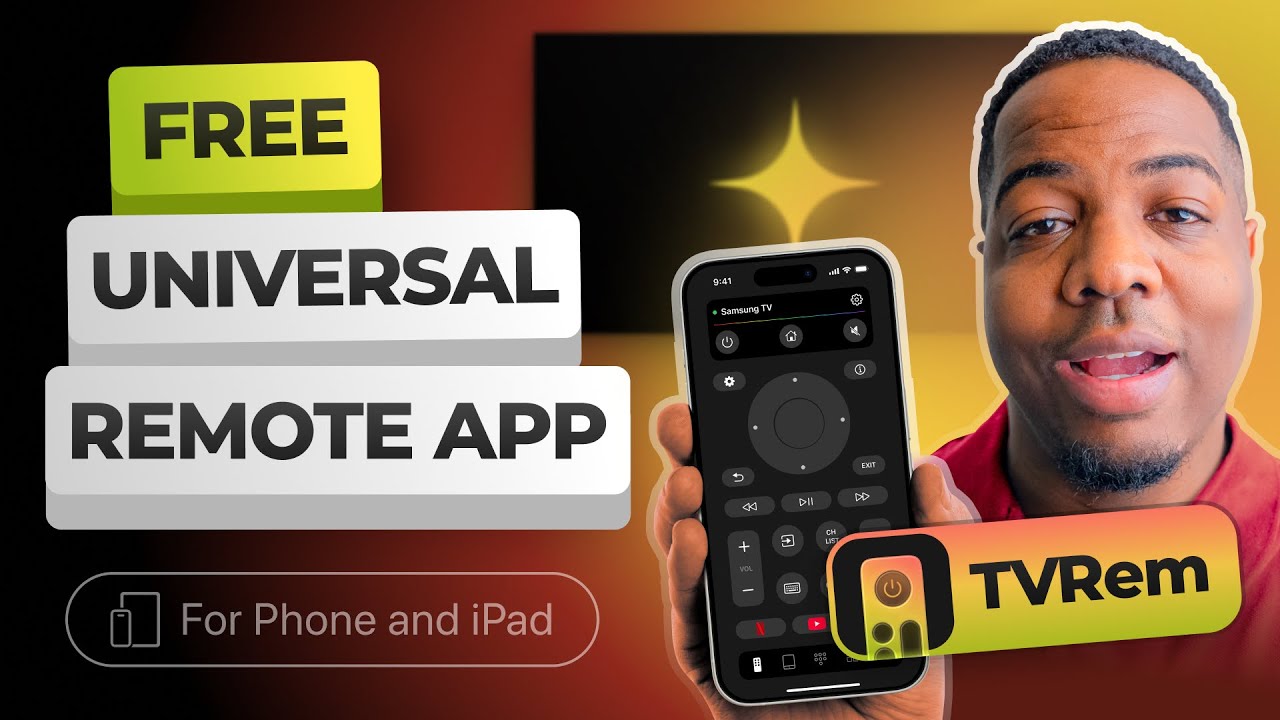
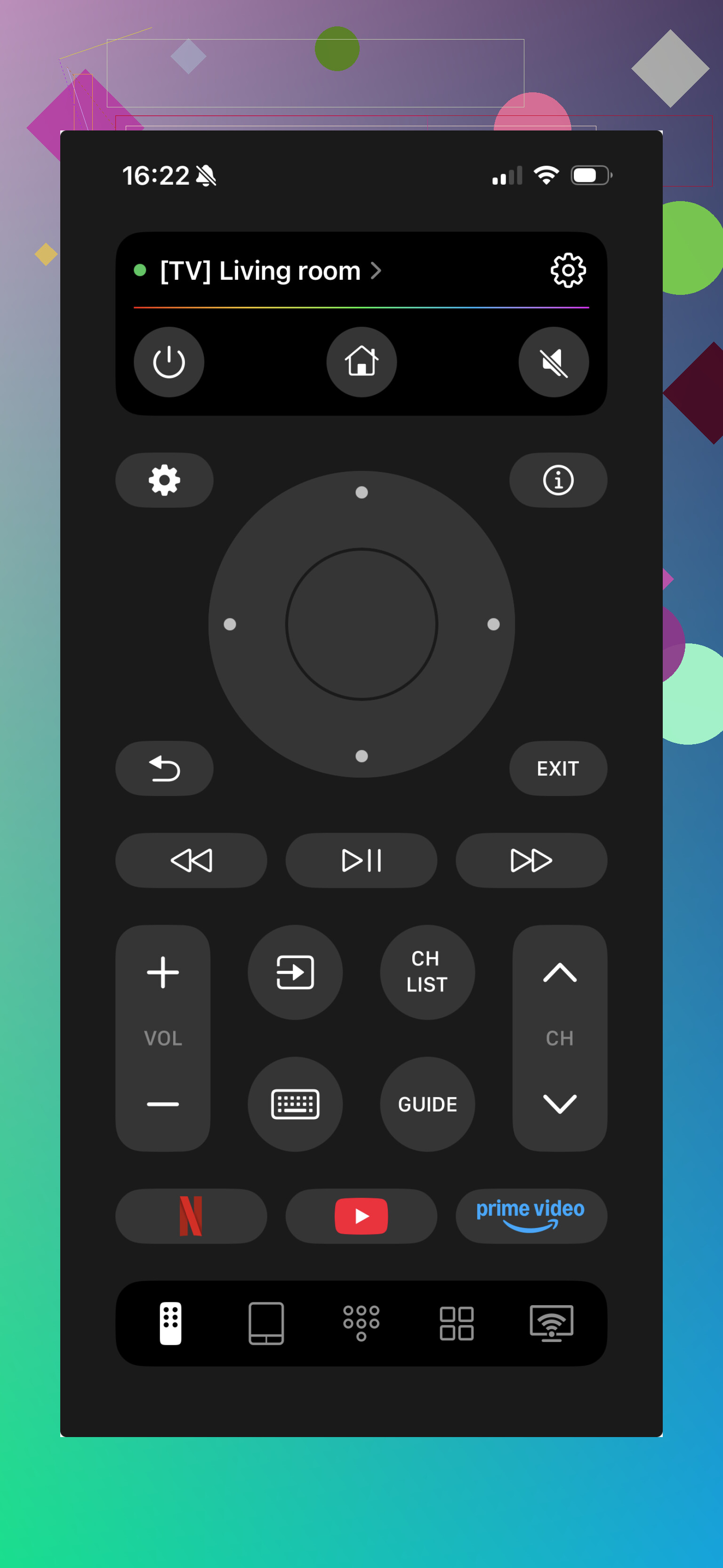
Here is what I noticed using it on a Philips Google TV.
Setup
I installed it on my iPhone, opened it, and it scanned my network for TVs. The only thing I had to make sure of was that the phone and the TV were on the same Wi‑Fi. Once I confirmed that, it detected the Philips Google TV automatically and paired in under a minute. No codes, no weird pairing loops.
Basic control
After pairing, it worked like a normal remote:
- Directional pad and OK/Enter for navigation
- Back, Home, and Menu buttons
- Volume up/down and mute
- Channel up/down
- Power toggle
Input lag was low enough that I stopped thinking about it. Channel changes and volume adjustments responded almost as fast as the physical remote.
Keyboard and touchpad
The part that made it stick for me:
- On-screen keyboard. Whenever I needed to type in a search field, I did it from the phone instead of fighting the on-screen letter grid. Entering Wi‑Fi passwords, YouTube searches, account logins, all went way faster.
- Touchpad mode. It adds a small touch area that behaves like a laptop trackpad, so you can move a pointer. That helped a lot with apps that have awkward focus behavior or small UI elements.
App switching and playback
From the app, I switched between installed apps on the TV without going through the full Google TV home screen each time. Play, pause, fast forward, rewind, and skipping worked fine in YouTube, Plex, and a couple of streaming apps I use daily. No special config needed.
Comparison with the official Google TV app
You can also use the Google TV app as a remote. It has a built‑in remote feature that connects over Wi‑Fi too, and it works with Google TV:
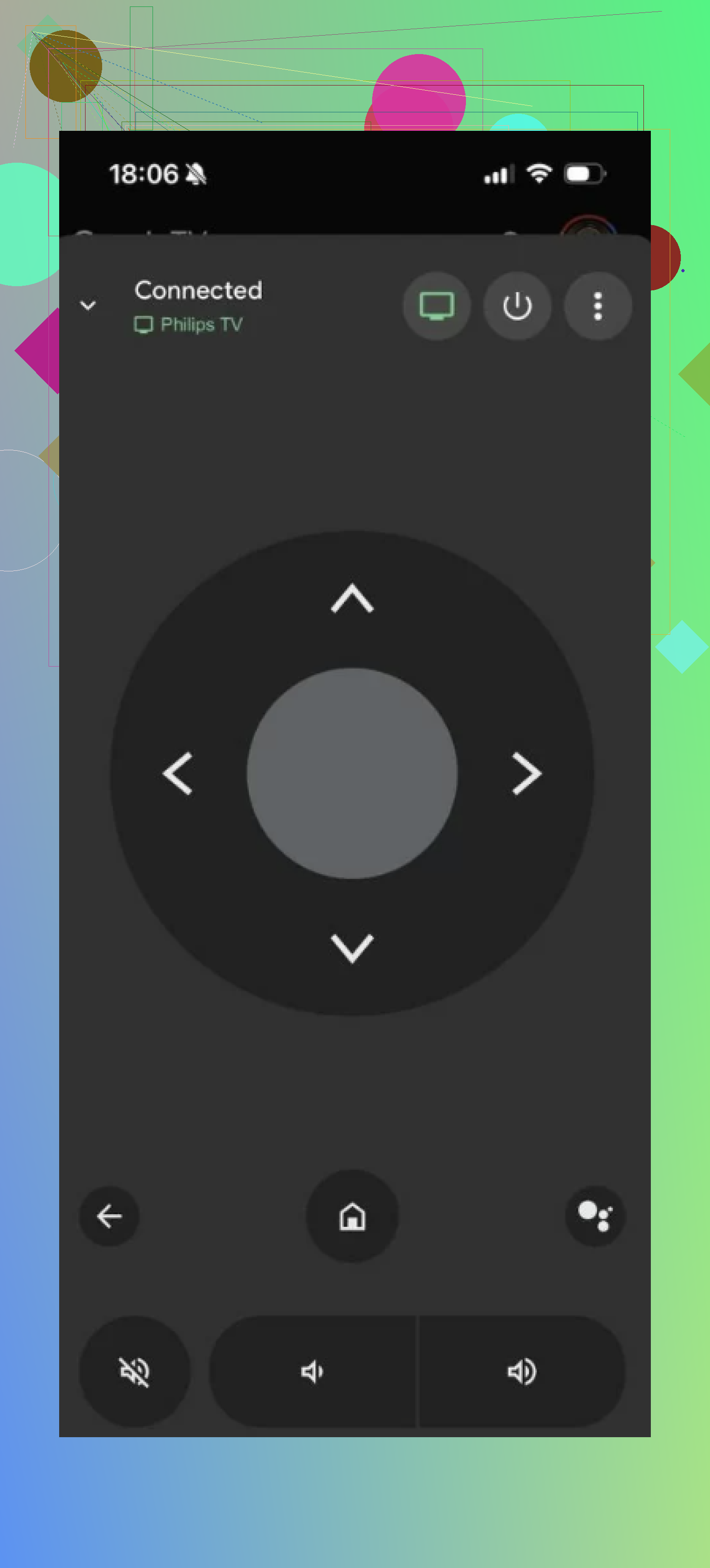
I tried that as well. It works, but it feels more bare-bones and focused on navigating the Google TV interface only. For simple stuff like moving around menus or hitting play/pause, it is fine. Once I needed more flexible control, keyboard, or better app switching, I kept going back to TVRem.
Multi-TV use
I tested it on another TV in the house that is not Philips but still a smart TV. TVRem detected and controlled that one too. So if you have multiple TVs from different brands, having one app handle them is easier than juggling different remotes.
If you want something closer to a full-featured remote that handles more than one TV brand, this is what I ended up sticking with:
6 Likes
Had the same flaky Wi‑Fi remote behavior on a Philips Google TV. The official app went from “ok” to “can’t find TV” overnight. Here is what fixed it for me long‑term, without repeating what @mikeappsreviewer already covered about third‑party remotes.
-
Lock down IP and network stuff
• On your router, give the TV a static DHCP lease so it always gets the same IP.
• Turn off “AP isolation” or “client isolation” on Wi‑Fi. If that is on, phones and TVs do not see each other.
• Keep phone and TV on the same band. If your router splits 2.4 GHz and 5 GHz into different SSIDs, use the same one for both. -
Reset the TV’s network stack
Philips Google TV sometimes keeps a bad network state.
• Settings → System → About → Restart.
• If that does nothing, go to Settings → Network & Internet → your Wi‑Fi → Forget. Then reconnect from scratch.
• After reconnecting, open the Google TV app remote and re‑pair. Wait a few seconds after the TV fully boots before opening the app. -
Check “Remote service” on the TV
On some Philips builds the remote app needs these toggles.
• Settings → System → About → scroll to “Android TV Remote Service” or similar.
• Ensure it is enabled and updated.
• If you see an option like “Allow mobile device connection on this network,” turn it on. -
Kill stale pairings
If the app used to work then broke, there is often a stale pairing.
On the TV:
• Settings → Apps → See all apps → Google TV or Android TV Remote Service → Storage → Clear data and cache.
• Reboot TV.
On your phone:
• Clear cache and data for the Google TV app, then sign back in and re‑pair. -
Disable aggressive power saving on TV
Some Philips Google TV models put network remote services to sleep.
• Settings → System → Power & energy → turn off “Energy saving switch” or put it on “Standard.”
• Disable “Quick start standby” if it is there. That one broke remote connections for me.
The idea is to keep the TV reachable when it looks “off” but is in standby. -
Check for firmware updates
Philips pushed at least one update that fixed Wi‑Fi discovery bugs.
• Settings → System → About → System update.
Install, then restart both TV and router. -
If all else fails, use mixed IR + Wi‑Fi
I know you asked about Wi‑Fi, but this helped stability.
• Use a cheap physical universal IR remote for power and volume.
• Use the Google TV app only for navigation, keyboard, and search.
This avoids the Wi‑Fi remote being your single point of failure.
On my setup, the big wins were static IP, disabling quick start standby, and clearing data for Android TV Remote Service. After that the Google TV app stopped losing the TV every few hours.
So, yes, you can get it stable, but it takes more router and TV settings tweaks than feels sane. The TV side is usually the culprit, not the phone app.
Short version: yes, you can get it stable, but the weak link usually isn’t the app, it’s Philips’ half‑baked Google TV build and network quirks.
Since @mikeappsreviewer already covered the TVRem route and @viajantedoceu went deep on router/TV settings, here are some different angles that helped my Philips Google TV stop ghosting the Google TV remote app:
- Stop relying only on Wi‑Fi discovery
Once the TV is found once:
- On the Google TV app, note the TV’s IP (or grab it from TV: Settings → Network → your Wi‑Fi → Advanced).
- On some Android phones, the remote app lets you connect directly to that IP instead of re‑scanning every time. Scanning over mDNS/SSDP is what often fails; direct IP is way more reliable.
If your phone can’t do that, at least write the IP down and make sure it’s the same after every reboot. If it keeps changing, you’re stuck in discovery hell.
- Kill “smart” router features quietly breaking discovery
I actually disagree a bit with the idea that static IP alone fixes it. That helped, but what finally stopped random disconnects for me:
- Turn off “Smart Connect” or band steering temporarily. Some routers bounce the TV between 2.4 and 5 GHz in the background and the remote service just loses it.
- Disable “Wireless intrusion detection / WIPS / Airtime fairness” on some ASUS / TP‑Link / UniFi setups. Those can silently throttle multicast and broadcast packets, which the Google TV remote uses to find the TV.
If disabling this stuff helps, then you know the problem is the router trying to be too clever.
- Check for duplicate control apps fighting each other
This one was sneaky:
- I had the Philips “TV Remote” app, Google TV app, and a third‑party remote all paired at once.
- Once I uninstalled the Philips app and only kept Google TV + one third‑party, disconnections got way rarer.
It looks like the Android TV Remote Service on the TV freaks out a bit when multiple clients spam it.
- Turn off VPNs and “private DNS” on the phone
People forget this:
- If you use a VPN (Warp, AdGuard, Blokada, etc.) on the phone, it may block local broadcast traffic. The app will “search forever” and never see the TV.
- Same with system‑wide adblockers or “Private DNS” set to something like dns adguard com. Try turning those off, then re‑scan.
This fixed my “used to work, suddenly can’t find TV” issue more than once.
- Avoid flaky Wi‑Fi on the TV itself
Philips Wi‑Fi radios are… not legendary. If your model has Ethernet:
- Plug the TV in via cable to the router or a nearby switch.
- Keep the phone on Wi‑Fi. Wired TV + Wi‑Fi phone is usually more stable than Wi‑Fi both ends.
I know @viajantedoceu focused more on config; in my case just hard‑wiring the TV did more than any setting tweak.
- Don’t rely on “instant” control after wake
Another annoying quirk:
- When the TV wakes from standby, the network stack is often 5 to 15 seconds behind the picture.
- If you open the Google TV app immediately, it sometimes marks the TV offline and then keeps that stale state.
What helped was: power on TV, wait 10–20 seconds, then open the remote app. Sounds trivial, but it stopped half my “can’t find TV” events.
- Check for weird casting conflicts
If you’re casting a lot:
- Stop any active Cast sessions from the phone before trying to use the remote.
- On the TV, go to Settings → Apps → See all apps → Google Play services → Force stop, then reopen the remote app.
I had a bug where active Cast plus the remote would fight over the same connection and the remote would randomly drop.
- Accept that sometimes the Google TV app is just meh
Not gonna sugarcoat it: on some Philips builds, the official remote is just flakier than third‑party options. I actually disagree with relying on it as a “main” remote if you already had it working and it suddenly went bad. At that point, you’ve already proved your network can work; the recent OS or app update might just be worse.
So:
- Keep the official Google TV app for quick navigation and voice search.
- Use TVRem (like @mikeappsreviewer mentioned) or another universal app when you want something that actually behaves like a proper remote for daily use.
If you try a couple of these and it suddenly becomes stable again, you’ll probably find the real culprit was either the router’s “advanced” features or phone‑side stuff like VPN/private DNS, not the reinstalling of the app itself.
Short version: I stopped chasing the Philips / Google TV remote app once I realized the TV itself sometimes loses its mind at the system level, not just on the network side that @viajantedoceu and @voyageurdubois covered, and not just the third‑party workaround angle that @mikeappsreviewer went into.
What helped in my case was treating the TV like a buggy Android phone:
-
Check system‑level “control” permissions
Settings → Apps → See all apps → Special app access.
Look for anything like “Device control,” “Modify system settings,” or “Display over other apps.”
Sometimes the Google TV app, Android TV Remote Service, or similar loses these permissions after an update. If they are off, the app will connect but fail to reliably control or wake the TV. -
Disable junk Philips features that interfere with control
On some Philips Google TV builds there are extras like:
- “EasyLink remote control” or “HDMI‑CEC control”
- “Remote control through HDMI”
Turn these off temporarily. I know CEC is handy, but on my set it caused weird conflicts where the TV randomly prioritized HDMI commands over Wi‑Fi / app commands, which felt like disconnects.
-
Simplify your input setup
If you have soundbars, AVRs, game consoles, etc. all talking CEC, disconnect them one by one for a test.
Remote flakiness vanished for me once I found an older AVR that was spamming CEC events and indirectly messing with the TV’s power state, which then confused the remote services. -
Don’t ignore Bluetooth issues
Weirdly, a partially paired BT remote / gamepad can affect app control:
- Remove any unused Bluetooth devices in Settings → Remote & accessories.
- Reboot and then try the Google TV app again.
I disagree slightly with treating Wi‑Fi as the only suspect; Philips’ Bluetooth stack can also make the system laggy and that shows up as “remote keeps disconnecting.”
- As for using a third‑party app
If you do go with something like TVRem universal TV remote instead of only fighting the stock app, here is the tradeoff as I see it:
Pros of using TVRem universal TV remote
- Generally faster to set up and reconnect than the official Google TV remote
- Works across multiple brands, so one app can control more than just the Philips
- Better keyboard & navigation than the default Google TV remote feature
- Often less sensitive to the flaky discovery issues the Philips build has
Cons of using TVRem universal TV remote
- You are depending on a third‑party developer to keep up with firmware / OS changes
- Some advanced Google TV specific functions or deep integration may still work better on the official Google TV app
- If Philips or Google change remote APIs, the app might need time to catch up
- Still uses the same basic network path, so if your LAN is cursed it will not magically fix that
Compared with what @viajantedoceu suggested, I would not spend forever tweaking every possible router feature unless you already suspect network weirdness from other devices. And compared with @voyageurdubois, I would start by isolating HDMI‑CEC / Bluetooth conflicts before blaming VPNs or private DNS, especially if everything else on your phone works fine on the LAN.
If you want something that “just works most of the time,” my practical setup ended up being:
- Official Google TV remote for quick, simple stuff and voice.
- TVRem universal TV remote for day‑to‑day control and typing.
- CEC tuned way down so the TV remote services are not fighting for control with every HDMI gadget in the house.